Class Aves
Soula Nebouxii (Blue Footed Booby)
Polihierax semitorquatus (African pygmy falcon)
Phoenicopterus chilensis (Chilean flamingo)
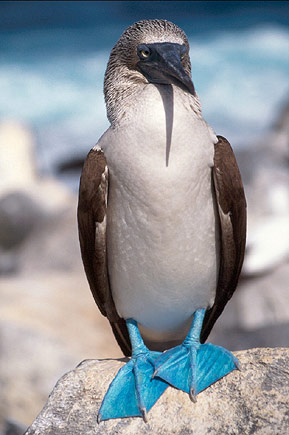
Blue Footed Booby
Soula Nebouxii
Family: Sulidae
Genus: Sula
Species: nebouxii
Boobies are around 32 inches long and weigh 3 pounds. They have long pointed wings and strong necks. Their eyes are yellow. Blue-footed Boobies stand out because of their turquoise to bright blue feet.
Boobies live off the western coasts of Central and
The female blue-footed booby lays two to three pale blue or green eggs. The nest is on the ground. The eggs take about 45 days to hatch. Both parents incubate the eggs using their feet. As the eggs start to hatch, the parents will rest the eggs on top of their feet. The male brings food back to the nest for the female and the chicks. The chicks take regurgitated fish from their parents' bills. The chicks stay with their parents for about two months.

African pygmy falcon
Polihierax semitorquatus
Family: Falconidae
Genus: Polihierax
Species: P. semitorquatus
This bird will engage in polyandrous relationships for warmth and defense.
FunFact: Smallest bird of prey in Africa
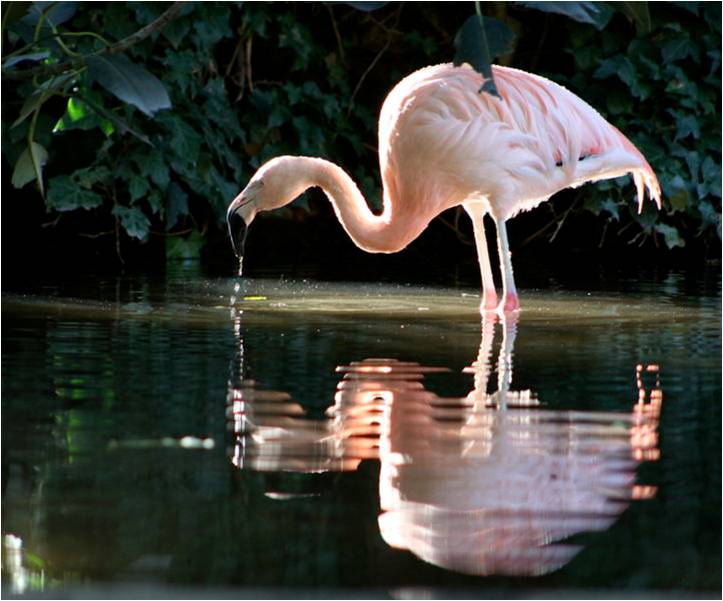
Phoenicopterus chilensis (Chilean flamingo)
Phylum: Chordata
Family: Phoenicopteridae
Genus: Phoenicopterus
Newborn chicks are light grey. Older chicks are grey, brown, and pink. Once a Chilean flamingo is two to three years of age they get their light pink plumage. Its wing feathers and black with crimson edges. It has a long neck and small head. Its bill is black and white. It has long green-grayish or light blue legs with pink joints and with three pink webbed front toes on each leg. Males are slightly larger than females. Its wingspan is 127-153cm and it weighs 2.5-3.5kg. They live for 40-50 years.
Their habitats consist of shallow, muddy, alkaline and
brackish lakes that have little or no vegetation. Chilean flamingos live in temperate
areas such as
Chilean flamingos filter organisms from the water and mud with thier long tongue. They eat small invertebrates such as brine flies, shrimp, mollusks, as well as blue-green algae, diatoms, protozoans, aquatic plants, seeds, insect larvae, and small worms. They can eat 10% of their weight each day.
These flamingos have a good sense of hearing but a bad sense
of smell. This flamingo's long neck is the elongation of vertebral column bones.
