Class Osteichthyes
Andrias japonicas (Japanese giant salamander)
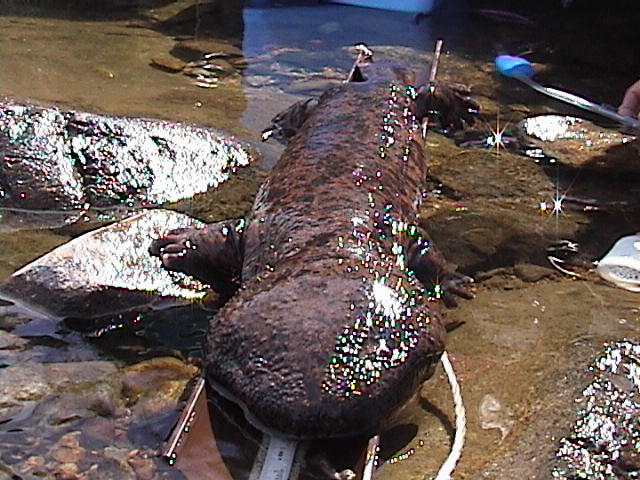
Japanese Giant Salamander
Phylum: Chordata
Family: Cryptobranchidae
Genus: Andrias
Species: japonicas
Phylum: Chordata
Family: Cryptobranchidae
Genus: Andrias
Species: japonicas
•Detailed description of the organism
•Habitat
They inhabit
the mountain streams and rivers of Japan.
•Diet
They eat almost anything they
can including insects, fish, mice, and even small invertebrates
like crabs. Their very slow metabolism enables them to go weeks without eating, if necessary.
•Zoological features
Their flat bodies
are streamlined for swimming at the bottom of fast-moving water. Giant
salamanders are covered in mucus, which protects their bodies from parasites. The giant
salamander absorbs oxygen through its skin. Loose folds of skin along
its sides increase surface area to help absorb even more oxygen.Adults have lungs as well
as gill slits.
•Basic Growth and development cycles
–Males
fight during breeding season. Many die because of the fights. Females lay between 400 and 500 eggs which can be fertilized by more than one male. Males guard the nests, which may contain eggs from several females,
until they hatch in the early spring.
