Phylum: Chordata
Family: Myliobatidae
Genus: Aetobatus
Species: A. narinari
Hihimanu
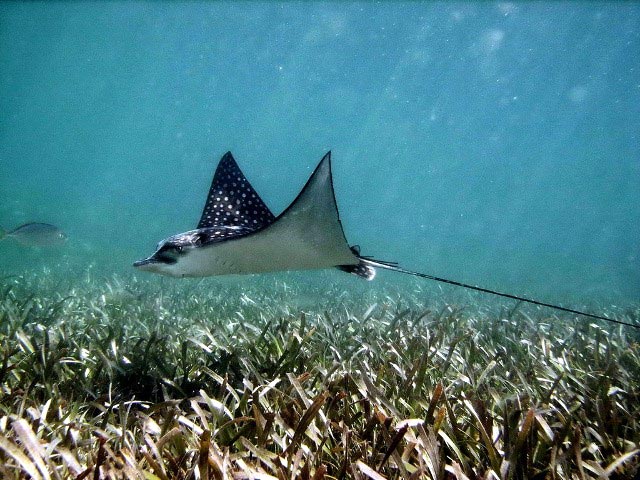
A Spotted Eagle Ray’s body can grow up to 2.5 meters; including the tail it can be 5 meters. It can weigh up to 507 pounds. This species of ray has a black, grey, or brown colour with bluish, greenish, or yellowish spots. Its ventral surface is white.
•Habitat
This type of ray lives in tropical and warm temperate waters. It can be found in western and eastern Atlantic Ocean, Indo-West Pacific, and eastern Pacific Ocean (ex.
•Diet
Spotted Eagle Rays eat clams, oysters, shrimp, octopus, squid, sea urchins, and some fish. Its shovel shaped bill is used to find benthic invertebrates in the mud as well.
•Zoological features
Spotted Eagle Rays have a long thin tail. It can be 2 to six feet in length. This tail has venomous spines. They are only used for defense and leave a stinging sensation.
•Basic Growth and development cycles
Eggs develop and hatch inside the mother. Baby Spotted Eagle Rays are called pups. The mother usually has four pups at a time. They are 6.7 to 13.8 inches wide.
Fun Fact: Spotted Eagle Rays are considered Near Threatened.
Tiger Shark
Galeocerdo Cuvier
Family: Carcharhinidae
Genus: Galeocerdo
Species: cuvier
Niuhi
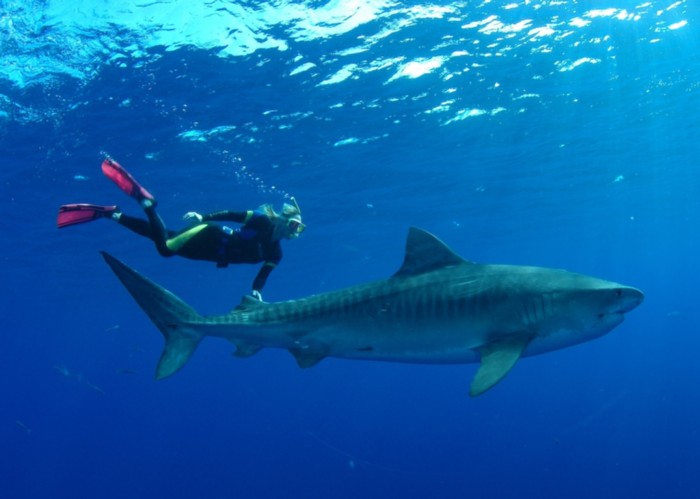
The tiger shark is often found in tropical and warm temperate waters. It inhabits both oceanic waters (up to 140 m) as well as shallow coastal waters. They seem to prefer turbid coastal areas where fresh water runoff occurs as different prey species may congregate to feed in these areas.
•Diet
Tiger shark has a cartilage skeleton.
Fun Facts: They are listed as near threatened throughout their range.
